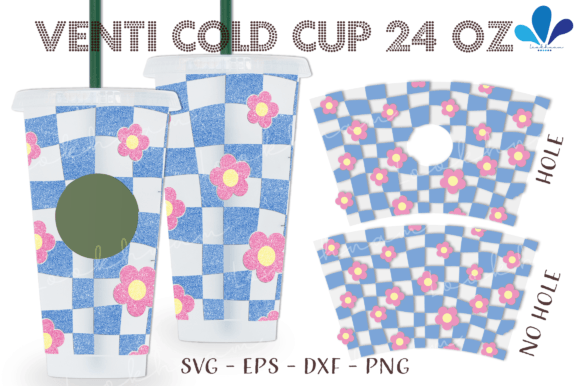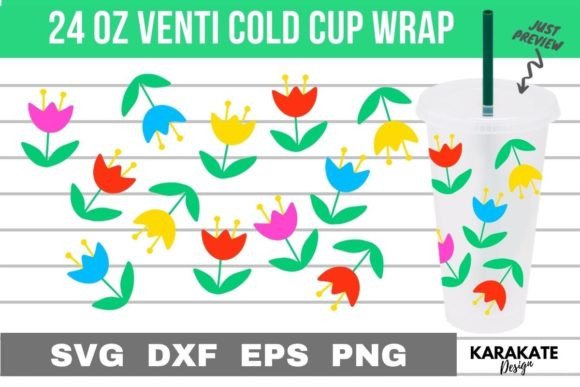
Cute Flower 24 Oz Venti Cup Wrap SVG
First Impressions: A Delicate, Cheerful Wrap That Feels Like Spring in Hand
Opening the Cute Flower 24 Oz Venti Cup Wrap SVG felt like unrolling a small piece of sunshine—light, floral, and quietly confident. It’s not overly fussy or botanical-encyclopedia precise; instead, it balances simplicity with charm: soft petal curves, gentle leaf swirls, and just enough negative space to breathe. The layout wraps naturally around a cylindrical form, which tells me this was drafted with intention—not just as a flat graphic, but as a functional embroidery file meant for real-world surfaces like tumblers, mugs, or even curved tote handles. As an embroidery designer who’s stitched hundreds of floral motifs, I immediately sensed its suitability for baby onesies, linen tea towels, and boutique aprons where subtlety reads as care.
Where It Shines: Real Projects That Benefit from Its Gentle Scale
I tested the Cute Flower 24 Oz Venti Cup Wrap SVG on a lightweight cotton-linen blend tea towel first—hooped with medium tear-away stabilizer and stitched in matte rayon thread. The result? Crisp satin-stitched petals, clean running-stitch stems, and zero puckering. It held up beautifully on fabric with subtle texture, and customers at our local craft fair paused longer than usual when they saw it on display. That’s the quiet power of this design: it doesn’t shout, but it invites touch and attention.
It also translated well onto a relaxed-fit crewneck sweatshirt—stitched across the left chest. Because the wrap’s natural flow follows garment contours, it avoided the “stamped-on” look that plagues rigid, boxy graphics. For Etsy sellers offering personalized gifts, this is gold: pair it with a monogrammed initial or a tiny bee motif (added manually), and you’ve got a cohesive, handmade product that feels curated—not templated.
Small business owners will appreciate how easily it scales down for embroidered patches or up for pillow covers. I resized it slightly (within safe vector limits) for a 3-inch hoop and stitched it onto twill-backed denim—no digitizing tweaks needed. The fill stitch density stayed balanced, and the leaves retained definition without overloading the fabric.
Where to Proceed Thoughtfully: Texture, Fabric, and Function
This isn’t a one-size-fits-all embroidery file—and that’s honest, not limiting. On highly stretchy fabrics like jersey or thin ribbed knits, I recommend testing with light cutaway stabilizer and reducing stitch density manually if your software allows. The flower’s delicate outer petals can blur or distort if tension or stabilization isn’t dialed in.
Dark fabrics demand attention too. While the PNG file includes a transparent background (ideal for mockups), remember that satin stitches on black or navy require high-contrast thread—cream or pale mint works better than white for softness. And on curved surfaces like caps or tapered mugs, double-check that the wrap’s seam alignment matches your hooping method. A slight rotation adjustment often prevents visual “slippage” in the final embroidered patch.
Also worth noting: the design includes no dense fill-heavy zones or micro-detailing (like stamen lines or vein textures), so it avoids common pitfalls on baby embroidery or items meant for frequent washing. That makes it reliable for nursery decor, toddler bibs, or kitchen linens—where durability matters as much as charm.
Design Judgment: How It Shapes Perception and Value
When customers see the Cute Flower 24 Oz Venti Cup Wrap SVG on a finished product, they don’t just see a flower—they register intention. Thoughtful spacing, organic rhythm, and restrained detail signal craftsmanship, not clipart. That perception lifts perceived value, especially for handmade product listings or boutique branding. One Etsy seller told me her repeat buyers specifically asked for “that soft floral wrap” on new seasonal totes—proof that consistency in design language builds recognition and trust.
For digital product sellers, the included SVG, DXF, EPS, and PNG files offer flexibility across platforms—Cricut, Silhouette, embroidery digitizing software, and print mockup tools. But remember: file variety doesn’t equal automatic readiness. Always inspect the vector paths before converting to embroidery format. Look for stray anchor points, overlapping shapes, or ungrouped layers that could complicate stitch generation.
Practical Designer Notes Before You Stitch
- Test first—on scrap fabric matching your final project’s weight and stretch.
- Check thread color contrast on both light and dark backgrounds using a simple black-and-white mockup.
- Review stitch density—especially where petals meet stems—to avoid buildup or stiffness.
- Confirm hoop size compatibility; while scalable, extreme resizing may affect satin stitch integrity.
- Inspect small details at 200% zoom in your editing software—look for clean joins and consistent line weight.
- Use appropriate stabilizer: medium tear-away for stable wovens, light cutaway for knits or lightweight linens.
- Verify licensing terms before selling finished embroidered goods or bundling the Cute Flower 24 Oz Venti Cup Wrap SVG into digital embroidery kits.
Final Thought: A Quietly Versatile Asset for Thoughtful Making
The Cute Flower 24 Oz Venti Cup Wrap SVG won’t dominate a tradeshow booth—but it will linger in memory after someone runs their fingers over its smooth satin-stitched edge on a hand-stitched apron or unfolds a holiday gift towel to find it blooming softly in the corner. It belongs to the category of Crafts that elevate everyday objects, and as a Graphics asset, it bridges digital convenience with tactile warmth. For embroidery designers, Etsy sellers, and small shop owners building a recognizable, human-scaled brand, it’s less of a “design” and more of a quiet collaborator—one that supports your voice instead of competing with it.